Today’s healthcare institutions must provide quality medical services while efficiently managing complex hospital operations, administrative processes, and patient data. Hospitals must handle patient records, appointments, diagnostics, billing, and internal coordination across multiple departments every day. Without an efficient digital system, these processes can become slow and difficult to manage.
To solve these challenges, healthcare providers are increasingly adopting hospital management software that connects clinical and administrative functions within a single digital platform. At Daffodil Software Ltd., we provide an advanced hospital management solution designed to simplify healthcare operations, improve patient services, and support hospitals in their digital transformation journey.
Our Smart Hospital ERP helps healthcare institutions (hospitals, clinics, diagnostic centers) manage patient information, automate hospital processes, and ensure seamless communication between departments.
What is a Hospital Management System?
A Hospital Management System (HMS) is an integrated digital platform that helps hospitals manage medical, administrative, and financial operations through a centralized system. It connects several hospital departments, allowing staff members to access and change data in real time.
Hospitals generate a significant amount of patient and operational data every day, including medical records, appointments, diagnostic reports, billing information, and administrative details. Managing this information manually can slow down hospital operations and increase the chances of errors, data duplication, and communication gaps between departments.
By implementing the best hospital management software, hospitals can digitize their processes, centralize data, and improve coordination between departments. A modern HMS helps manage patient registration, doctor schedules, laboratory reports, pharmacy inventory, billing, and other administrative tasks in one integrated platform, enabling hospitals to operate more efficiently and provide better patient care.
Why Hospitals Need a Hospital Management System
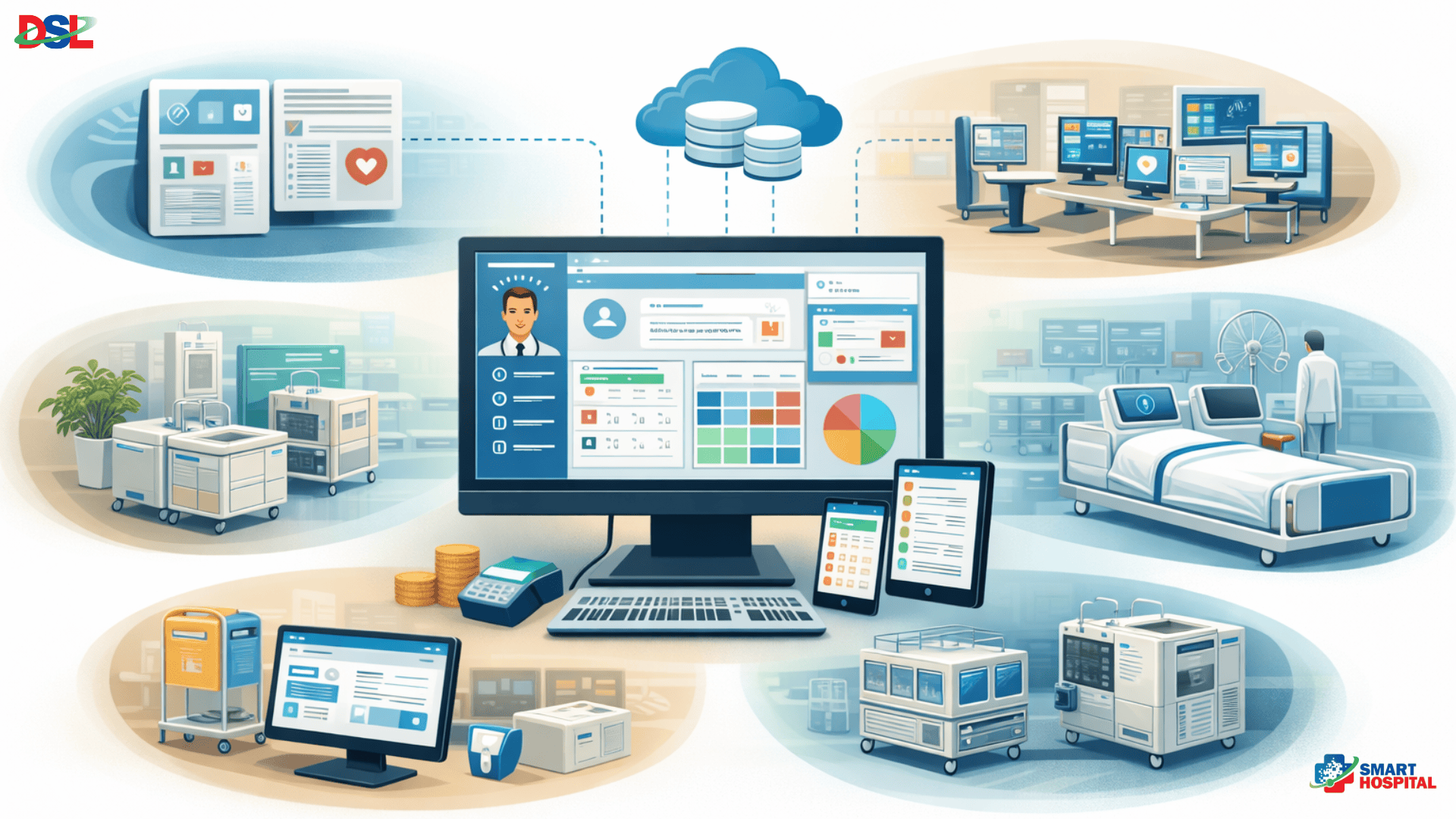
Hospitals need hospital management software to manage daily operations efficiently and provide better healthcare services. Organization of patient information, optimization of procedures, and reduction of manual tasks are all facilitated by a digital system in hospitals.
Key reasons:
Centralized Patient Records - Keeps all patient information and medical history in one secure system.
Easy Appointment Scheduling - Helps manage doctor schedules and patient appointments smoothly.
Better Department Coordination - Improves communication between different hospital departments.
Automated Billing and Payments - Simplifies hospital billing, invoices, and financial tracking.
Less Paperwork - Reduces manual work by automating routine administrative tasks.
Improved Patient Care - Doctors can quickly access accurate patient information for better treatment.
Efficient Hospital Operations - Helps hospitals manage resources and workflows more effectively.
Key Features of Hospital Management System
A Hospital Management Software should support both medical and administrative tasks. It helps hospitals manage daily operations smoothly and improves overall efficiency. By connecting different hospital departments in one system, it also improves coordination and patient care.
Below are some essential features commonly found in advanced healthcare systems.
Centralized Patient Records - Keeps all patient information and medical history in one secure system.
Easy Appointment Scheduling - Helps manage doctor schedules and patient appointments smoothly.
Better Department Coordination - Improves communication between different hospital departments.
Automated Billing and Payments - Simplifies hospital billing, invoices, and financial tracking.
Less Paperwork - Reduces manual work by automating routine administrative tasks.
Improved Patient Care - Doctors can quickly access accurate patient information for better treatment.
Efficient Hospital Operations - Helps hospitals manage resources and workflows more effectively.
Centralized Patient Information System
A centralized patient database allows hospitals to store medical records, treatment histories, prescriptions, and diagnostic results in one place. Doctors and healthcare professionals can access this information instantly, which helps improve treatment decisions and patient care.
Smart Appointment Scheduling
Appointment management tools help hospitals organize doctor consultations and patient visits efficiently. Patients can book appointments easily, while hospital administrators can monitor doctor availability and optimize scheduling.
Electronic Medical Records (EMR)
Electronic medical records allow healthcare providers to maintain digital patient histories and clinical data. EMR systems reduce paperwork, improve accuracy, and make patient information easily accessible.
Automated Billing and Financial Management
Hospital billing systems automate invoice generation, payment tracking, and insurance processing. This reduces administrative workload while improving financial transparency.
Laboratory and Diagnostic Integration
Laboratory management tools connect diagnostic services directly with patient records. Test results can be uploaded and accessed online, which allows for faster diagnosis and treatment planning.
Pharmacy and Inventory Control
Pharmacy modules manage medicine inventory, prescriptions, and drug dispensing. These systems ensure that hospitals maintain adequate stock levels and avoid medication shortages.
Real-Time Analytics and Reporting
Advanced reporting features provide hospital administrators with insights into hospital performance, patient statistics, and financial metrics. These insights support data-driven decision-making.
Secure Data Management
Healthcare systems handle highly sensitive data. Modern cloud-based hospital management ERP solutions include secure access controls, encrypted storage, and compliance with healthcare data standards.
Daffodil Software Ltd.’s Smart Hospital Modules
Daffodil Software Ltd. provides Smart Hospital, which has a complete set of modules designed to manage clinical services, hospital administration, and financial operations. These modules help hospitals automate processes, improve coordination between departments, and deliver better patient care. The system integrates medical, operational, and administrative activities into one centralized platform.
Appointment Management (Online & Offline)
This module allows patients to book appointments both online and offline. Hospitals can manage doctor schedules, monitor appointment availability, and reduce patient waiting time.
Patient Registration & Management
The patient registration system records essential patient information and generates a unique patient ID. It ensures accurate documentation and quick access to patient data. The patient management module tracks patient history, treatments, and medical interactions throughout the healthcare journey.
OPD & IPD Management
The Outpatient Department (OPD) module manages patient visits, consultations, and treatment records for patients who do not require hospitalization.
The Inpatient Department (IPD) module manages patient admissions, bed allocation, treatment monitoring, and discharge processes.
Electronic Medical Records (EMR)
EMR stores digital patient health records, including medical history, diagnoses, prescriptions, and treatment plans. It helps doctors access patient data quickly and improves treatment decisions.
Laboratory Information Management System (LIMS)
Manages laboratory testing workflows, sample tracking, and report generation. Test results can be directly linked to patient records.
Doctor Management
Manages doctor profiles, specializations, schedules, and consultation activities. It helps hospitals coordinate physician availability efficiently.
E-Prescription Preparation
Doctors can generate digital prescriptions using the system. This reduces manual errors and ensures prescriptions are properly stored in patient records.
HR, Attendance & Payroll
Manages hospital staff records, attendance tracking, payroll processing, and employee information.
Billing and Invoicing
Automates billing for consultations, laboratory services, medicines, and other hospital services while maintaining accurate financial records.
Customer Relationship Management
CRM features allow hospitals to manage patient interactions, feedback, and communication.
These modules work together to create a complete and integrated hospital information system that improves hospital operations and enhances the quality of healthcare services.
Benefits of Hospital Management Systems
Implementing an HMS brings numerous operational and clinical advantages for healthcare institutions.
Improved Patient Care
Healthcare professionals can access accurate patient information instantly, which improves diagnosis and treatment decisions.
Faster Hospital Operations
Automation speeds up routine processes such as patient registration, appointment scheduling, billing, and reporting.
Reduced Medical Errors
Digital systems reduce the risk of lost records, incorrect prescriptions, or miscommunication between departments.
Better Resource Management
Hospitals can efficiently manage staff schedules, medical equipment, medical supplies, and hospital equipment through centralized systems.
Increased Operational Efficiency
Automation decreases manual workload, allowing healthcare workers to concentrate on patient care.
Data-Driven Decision Making
Real-time reports and analytics help hospital administrators monitor hospital performance and improve operational strategies.
Cloud-Based Hospital Management ERP
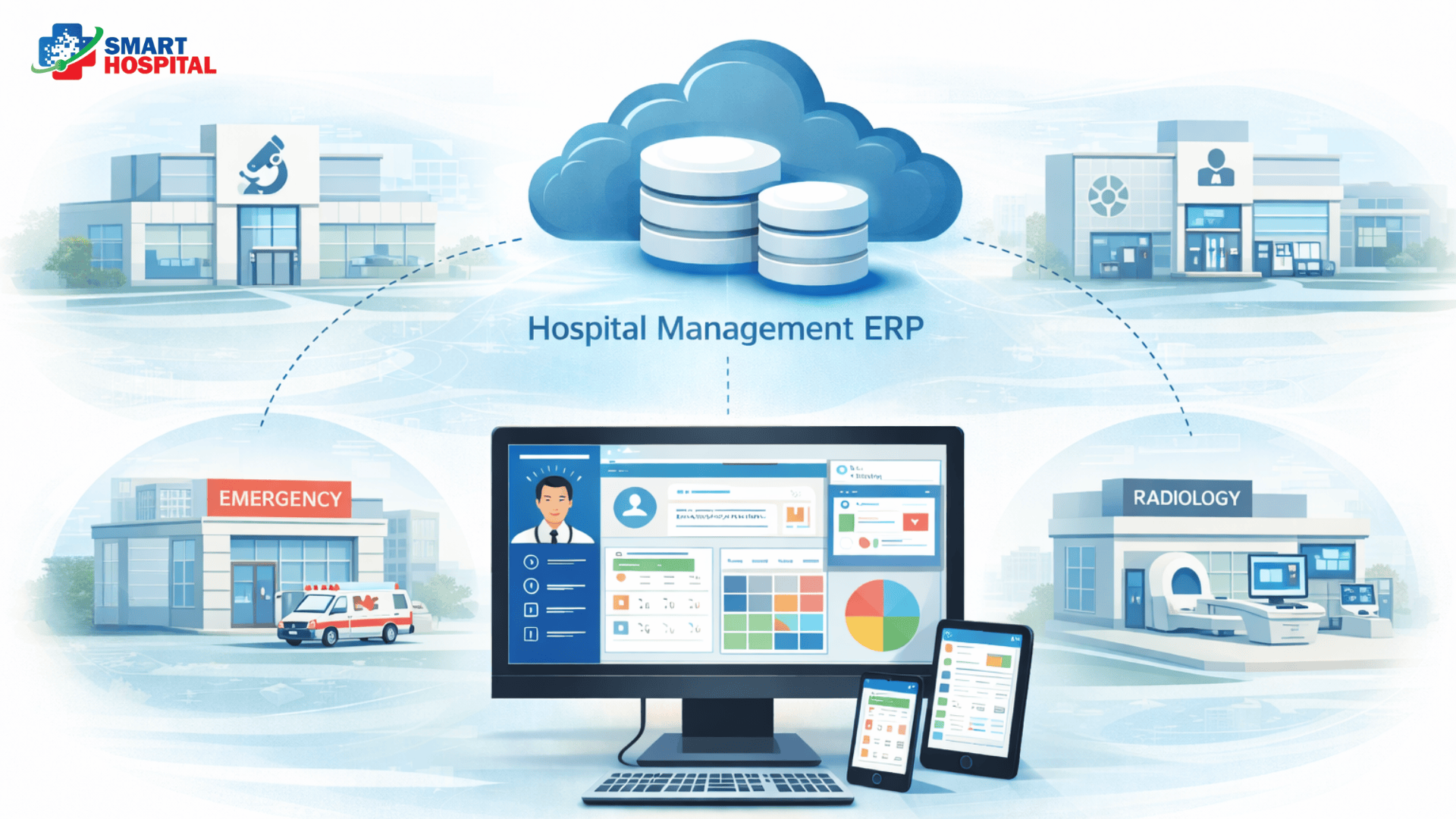
Modern hospitals increasingly prefer cloud-based hospital management ERP systems because they offer flexibility, scalability, and cost efficiency.
Cloud solutions reduce infrastructure expenses because hospitals do not have to maintain local servers. They also support secure data storage, automatic updates, and regular backups.
Hospitals with several branches can use a single system to handle operations in various locations. This improves data management, operational efficiency, and overall healthcare service delivery.
Hospital Management Software in Bangladesh
Hospitals in Bangladesh are increasingly adopting hospital management software solutions to improve patient services and operational efficiency. Many hospitals and diagnostic centers are using digital systems to manage hospital activities more effectively.
This digital approach reduces paperwork and improves coordination between hospital departments. It also helps hospitals meet the growing demand for quality healthcare services across the country.
Conclusion
Hospitals and diagnostic centers need reliable technology to manage daily operations and deliver better patient care. A hospital management system helps hospitals digitize their processes, organize workflows, and improve overall service quality.
With integrated modules for patient management, diagnostics, pharmacy, finance, and hospital administration, an HMS connects different departments on a single platform. This improves coordination, reduces manual work, and helps hospitals operate more efficiently.
At Daffodil Software Ltd., we develop scalable hospital ERP software solutions that support hospitals in building strong digital systems. Our Smart Hospital platform helps hospitals manage operations smoothly while focusing on their main goal - providing quality patient care
Centralized Patient Information System
Smart Appointment Scheduling
Electronic Medical Records (EMR)
Automated Billing and Financial Management
Laboratory and Diagnostic Integration
Pharmacy and Inventory Control
Real-Time Analytics and Reporting
Secure Data Management
Appointment Management (Online & Offline)
Patient Registration & Management
OPD & IPD Management
Electronic Medical Records (EMR)
Laboratory Information Management System (LIMS)
Doctor Management
E-Prescription Preparation
HR, Attendance & Payroll
Billing and Invoicing
Customer Relationship Management
Improved Patient Care
Faster Hospital Operations
Reduced Medical Errors
Better Resource Management
Increased Operational Efficiency
Data-Driven Decision Making
Conclusion